

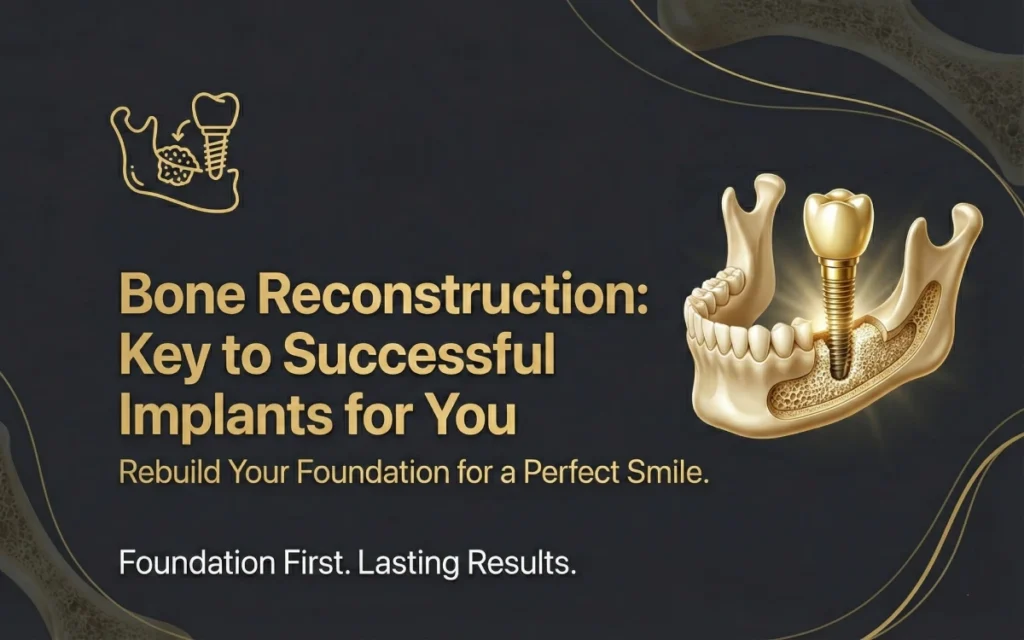
A healthy, confident smile starts with a strong foundation — your jawbone. When it comes to dental implants, bone strength and volume play an essential role in ensuring long-term stability and success. However, not everyone has enough natural bone to support an implant, especially after tooth loss or infection. That is where bone reconstruction becomes vital.
This procedure helps rebuild and regenerate bone in areas where it has weakened or disappeared, allowing implants to be placed securely and successfully. Thanks to advances in implant dentistry in Dubai, patients who once thought they were not suitable candidates for implants can now enjoy permanent, natural-looking smiles through advanced bone grafting for dental implants and jawbone graft in Dubai procedures.
Why Bone Health Matters in Implant Dentistry
Your teeth and jawbone have a direct relationship. Every time you chew, your tooth roots stimulate the bone beneath them, keeping it strong and healthy. When a tooth is lost, this stimulation stops, and the bone begins to shrink in a process called resorption. Over time, this leads to:
- Thinner and weaker jawbone structure
- Shifting or loosening of neighbouring teeth
- Changes in facial appearance, such as a sunken jawline
- Difficulty wearing dentures or getting dental implants
Without enough bone, implants cannot fuse properly with the jaw, and the entire restoration may fail. Bone reconstruction reverses this issue by rebuilding lost bone and creating a strong, healthy base for successful implant placement.
Patients who have had missing teeth for several years, chronic gum infections, or trauma to the jaw are the ones who benefit most from this treatment.
What Is Bone Reconstruction?
Bone reconstruction, also known as bone grafting, is a surgical procedure used to replace or regenerate lost bone in the jaw. It creates a solid foundation for future dental implant bone graft placement and restores natural facial contours.
During this process, a grafting material is placed in the area where bone is missing or too thin. Over the following months, your body gradually integrates this graft, forming new bone tissue that merges with the natural structure.
There are several techniques used in bone reconstruction depending on the extent and location of the bone loss:
1. Autogenous Grafts (Autografts)
This involves using bone taken from your own body, usually from the chin, hip, or jaw. Because it comes from your own tissue, it integrates perfectly and provides excellent stability for implants.
2. Allogenic Grafts (Allografts)
Processed bone from a donor source is used to provide a scaffold that encourages natural bone regeneration. This is a safe and reliable method used in many modern dental clinics.
3. Xenografts
This technique uses natural bone material from an animal source, usually bovine, that has been sterilised and treated to make it biocompatible. It promotes the growth of new human bone over time.
4. Synthetic Bone Grafts
Made from biocompatible materials such as calcium phosphate, these grafts mimic the structure of natural bone and encourage regeneration without requiring donor tissue.
Your specialist will decide which type of graft is most suitable for you depending on your individual needs, health status, and the area that requires reconstruction.
The Bone Reconstruction Process: Step by Step
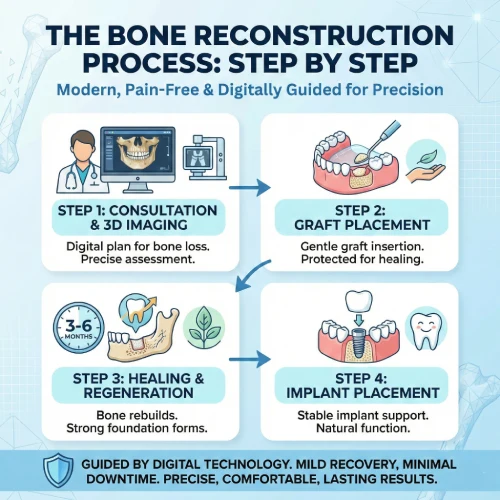
Modern bone reconstruction is a precise and comfortable procedure performed under local anaesthesia or sedation to ensure a pain-free experience.
Step 1: Consultation and 3D Imaging
Your dentist will begin with a detailed assessment, including 3D scans and X-rays. These images help determine the level of bone loss and create a digital plan for graft placement.
Step 2: Graft Placement
During the procedure, the graft material is gently placed in the area where bone volume needs to be restored. The graft may be covered with a biocompatible membrane to protect it and promote proper healing.
Step 3: Healing and Regeneration
Over the next three to six months, the graft integrates with your natural bone. This period allows your jawbone to rebuild and strengthen itself, forming a solid structure capable of supporting implants.
Step 4: Implant Placement
Once the bone has regenerated, dental implants are placed. The strong bone foundation ensures long-term stability, function, and natural appearance.
This entire process is guided by digital technology to enhance precision and reduce discomfort. Most patients describe recovery as mild and manageable with minimal downtime.
The Role of Bone Grafting in Implant Success
Bone grafting for dental implants is not just an additional step; it is the cornerstone of successful implant dentistry. Without sufficient bone, even the best implant cannot last. A graft ensures that the implant integrates properly, providing strength, durability, and longevity.
Key benefits of bone reconstruction include:
- Restores bone volume and density for secure implant anchorage
- Prevents further bone loss after extractions
- Maintains facial structure and youthful appearance
- Increases the long-term survival rate of implants
- Expands treatment possibilities for patients with bone deficiency
By rebuilding the lost bone before implant placement, your dentist creates an environment where implants can function just like natural teeth — strong, stable, and permanent.
Advanced Bone Reconstruction Techniques in Dubai
Dubai has become a leader in advanced implant dentistry, offering cutting-edge bone grafting solutions for even the most complex cases. Clinics specialising in jawbone graft in Dubai use the latest technology for precision and predictability.
Popular bone reconstruction techniques in Dubai include:
Guided Bone Regeneration (GBR)
A special biocompatible membrane is used to guide the body’s natural bone-forming cells into the desired area, allowing controlled and effective bone regrowth.
Sinus Lift or Sinus Augmentation
In cases where the upper jaw lacks bone due to proximity to the sinus cavity, bone graft material is placed beneath the sinus membrane to create adequate space and support for implants.
Socket Preservation
When a tooth is extracted, bone graft material is immediately placed into the empty socket to prevent bone shrinkage and maintain ridge height.
Onlay Grafts and Block Grafts
These techniques are used for more severe bone loss, where bone blocks or layers are attached to deficient areas to rebuild vertical or horizontal bone volume.
Clinics in Dubai perform these procedures using advanced 3D navigation and digital planning, ensuring accuracy, faster healing, and superior results.
Recovery and Aftercare
Recovery after bone reconstruction is generally smooth. Most patients return to normal routines within a few days. Mild swelling or tenderness is common but temporary.
To promote optimal healing:
- Follow your dentist’s post-operative instructions carefully
- Take prescribed medications as directed
- Avoid smoking and alcohol as they delay bone healing
- Eat soft, nutrient-rich foods
- Keep the surgical area clean but avoid brushing it directly
- Attend all follow-up appointments to monitor healing progress
Over the next few months, your jawbone gradually rebuilds itself, creating a firm foundation for future implants. Once your dentist confirms full healing, implant placement can proceed confidently.
Maintaining Bone Health After Implants
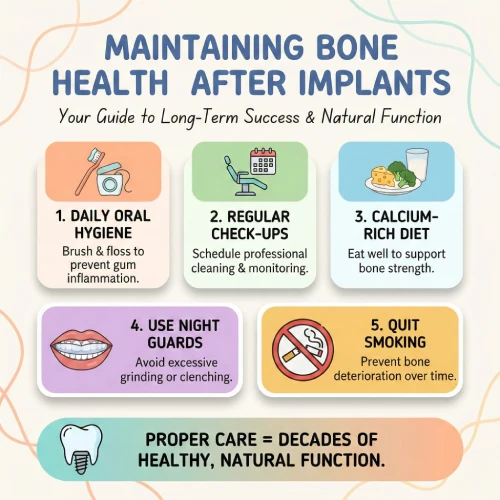
After successful implant placement, maintaining healthy bone tissue is just as important. Good oral hygiene and lifestyle choices help ensure long-term success.
Tips for long-term bone and implant health:
- Brush and floss daily to prevent gum inflammation
- Schedule regular dental check-ups for professional cleaning and monitoring
- Eat a calcium-rich diet to support bone strength
- Avoid excessive grinding or clenching by using night guards if necessary
- Quit smoking, as it can lead to bone deterioration over time
With proper care, dental implants supported by bone reconstruction can last for decades, functioning and looking just like natural teeth.
Why Choose Dubai for Bone Reconstruction
Dubai’s dental clinics are globally recognised for their advanced implant technologies and internationally trained specialists. Patients seeking dental implant bone graft procedures in Dubai benefit from:
- 3D CBCT scanning and digital implant planning
- Minimally invasive surgical approaches
- Access to world-class implant and graft materials
- Comfortable sedation and pain-free techniques
- Highly experienced oral and maxillofacial surgeons
Whether you need a minor graft or a full jaw reconstruction, you can expect precision, safety, and long-lasting results.
Conclusion
Bone reconstruction is the foundation of long-term implant success. It restores lost bone, strengthens your jaw, and allows implants to function with natural stability and beauty. Without sufficient bone support, even the most advanced implant cannot achieve lasting results.
If you are considering bone grafting for dental implants or exploring jawbone graft in Dubai, visit DOME MedDental Clinic, Dubai, led by Professor Dr Philippe Chanavaz, an internationally acclaimed expert in implant and reconstructive surgery.
Book your consultation today with Dr. Philippe, and discover how advanced bone reconstruction and dental implant bone graft procedures can restore your oral health, enhance your appearance, and give you the lasting smile you deserve.